New, Never Installed combines established Sensenich manufacturing, lightweight aluminum construction, fixed-pitch operation, and potential compatibility with selected general aviation aircraft.
The shortened Sensenich 74DM6 Propeller description can improve search visibility, while the complete part number should remain available for technical review.
A Sensenich Fixed-Pitch Propeller may also be categorized as a Sensenich Aluminum Propeller or Fixed-Pitch Aluminum Propeller when the exact material and configuration are confirmed.
The 74-Inch Aircraft Propeller, 60-Inch Pitch Propeller, Lycoming O-320 Propeller, and General Aviation Propeller keywords represent common dimensional, engine, and application searches associated with the model.
A Two-Blade Aircraft Propeller should be treated as one matched rotating assembly, while a Sensenich Aircraft Propeller should be identified through verified manufacturer markings.
Identifying the Sensenich Propeller Correctly
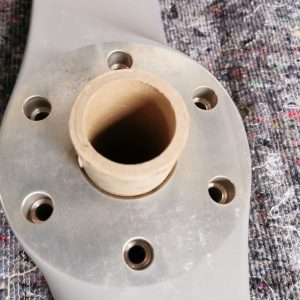
The seller should provide clear photographs of the data plate, hub, blade faces, blade backs, leading edges, trailing edges, tips, mounting holes, and identification markings.
Reliable traceability improves the commercial and maintenance value of the Sensenich 74DM6 Propeller.
Separating Storage History from Serviceability
An unused propeller may still develop coating damage, corrosion, moisture exposure, scratches, dents, contamination, or packaging-related abrasion.
The propeller should be inspected even when it remains inside original packaging because temperature changes, condensation, impact, chemical exposure, and shifting during transport can affect condition.
How a Fixed-Pitch Aluminum Propeller Operates
Correct matching protects the engine, propeller, and aircraft from unsuitable loading or operation.
Professional verification supports responsible use of the Sensenich Fixed-Pitch Propeller.
Benefits of Metal Propeller Blades
Material condition should be reviewed by appropriately qualified aviation personnel.
Both blade faces, backs, roots, tips, leading edges, trailing edges, and hub transitions should be examined under suitable lighting.
Confirming the Propeller Diameter
Propeller diameter affects ground clearance, tip speed, engine loading, airframe clearance, and aerodynamic performance.
The receiving aircraft must provide sufficient propeller clearance under applicable loading and operating conditions.
Verifying the 74DM6-0-60 Pitch
The seller should not guarantee specific performance based only on the pitch designation.
Professional pitch evaluation protects the Sensenich 74DM6-0-60 Propeller.
Verifying Aircraft and Engine Applications
Aircraft-specific research reduces unsuitable fitment and loading concerns.
The mounting flange, pilot fit, bolt pattern, spacer click here arrangement, and spinner components should also match the receiving installation.
Protecting the Matched Two-Blade Design
Matched blade condition supports smoother propeller operation.
Unexplained grinding, drilling, filing, material removal, or attached weights should receive professional review.
Preparing the Replacement Aircraft Propeller
The mounting face should remain clean, flat, protected, and free from defects that could prevent correct seating.
A propeller-only listing may require additional hardware before installation can begin.
Evaluating Scratches, Dents, and Finish Damage
Professional evaluation protects the Sensenich Aircraft Propeller from unsuitable installation.
Trailing edges and blade tips should remain free from bending, cracking, deformation, edge damage, and inconsistent contour.
Corrosion Inspection and Storage History
A dry storage history can reduce corrosion risk but does not eliminate the need for inspection.
Periodic inspection can identify developing coating or environmental concerns.
Understanding Approved Propeller Design
Accurate language prevents unsupported certification or installation claims.
A release certificate or service tag belonging to another serial number does not establish the condition of the offered unit.
Evaluating Release Paperwork
The serial number should match every manufacturer record, inspection tag, shipping document, and release certificate.
Documentation associated with a planned aircraft installation does not independently approve another aircraft application.
Replacement Propeller Buying Guide
The buyer should obtain enough information for a qualified propeller specialist or aviation mechanic to review the component.
- Confirm P/N 74DM6-0-60, the complete serial number, manufacturer markings, 74-inch diameter, 60-inch pitch, blade count, hub dimensions, bolt pattern, and original configuration.
- Do not treat original packaging, clean paint, new wording, or never-installed status as proof of present serviceability.
- Confirm the sales invoice, payment protection, packaging method, freight insurance, inspection period, return terms, and stated propeller condition.
Protecting a New Two-Blade Propeller in Transit
The propeller should be packaged in a rigid crate or container that supports the hub and protects both blades from bending, impact, abrasion, and uncontrolled movement.
The propeller should remain immobilized throughout transport.
Preventing Corrosion and Handling Damage
Protective materials should prevent contamination without trapping moisture.
Organized storage supports the commercial value of the General Aviation Propeller.
Completing the Propeller and Spinner Assembly
Incorrect bolts, unsuitable washers, damaged threads, or improvised spacers should not be used.
Disciplined installation supports dependable Two-Blade Aircraft Propeller operation.
After installation, technicians should verify security, propeller clearance, blade tracking, spinner alignment, hardware condition, and surrounding aircraft components before starting the engine.
Protecting Long-Term Propeller Condition
Unapproved filing or sanding can remove excessive material and alter the blade geometry.
Preventive care supports dependable General Aviation Propeller service.
Choosing a Valuable Aviation Component
Propellers with clear photographs, complete records, transparent storage history, and verified condition are easier for professional buyers to evaluate.
Total acquisition cost may include the purchase price, specialist inspection, dimensional verification, static or dynamic balance work, mounting hardware, spinner components, installation labor, packaging, shipping, and documentation.
Final Thoughts on the Sensenich 74DM6 Propeller
New, Never Installed may suit aircraft owners, maintenance organizations, builders, propeller specialists, restorers, aviation dealers, and general aviation operators seeking an identifiable unused component.
The propeller should be evaluated with the receiving aircraft’s Lycoming engine, flange, spinner, operating limitations, clearances, and approved installation requirements in mind.
Whether buyers need a Sensenich Fixed-Pitch Propeller, Sensenich Aluminum Propeller, Fixed-Pitch Aluminum Propeller, or Aluminum Aircraft Propeller, current condition and dimensional conformity should be verified.
With verified identity, suitable dimensions, documented storage, acceptable physical condition, professional installation, and routine maintenance, the propeller can provide dependable long-term value.